Seafood Risotto with White Wine
Highlighted under: International Recipe Hub
I love preparing seafood risotto with white wine because it transports me straight to the coastal towns of Italy. The creamy texture of the Arborio rice, combined with the briny freshness of the seafood, creates a dish that is both comforting and elegant. Each spoonful bursts with flavor, thoughtfully layered with the zesty kick of white wine. It's perfect for impressing guests or enjoying a cozy night in, and it's quicker to make than you might think—just 30 minutes from start to finish!
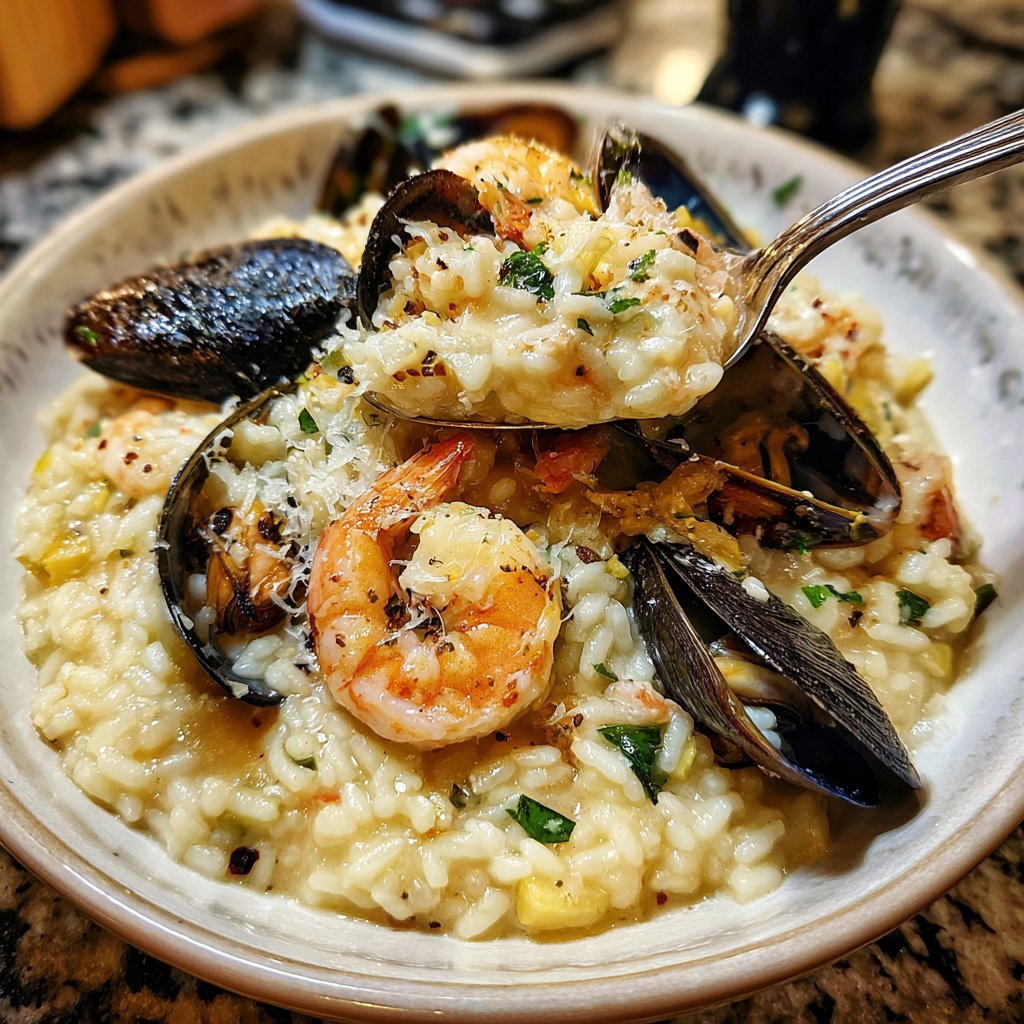
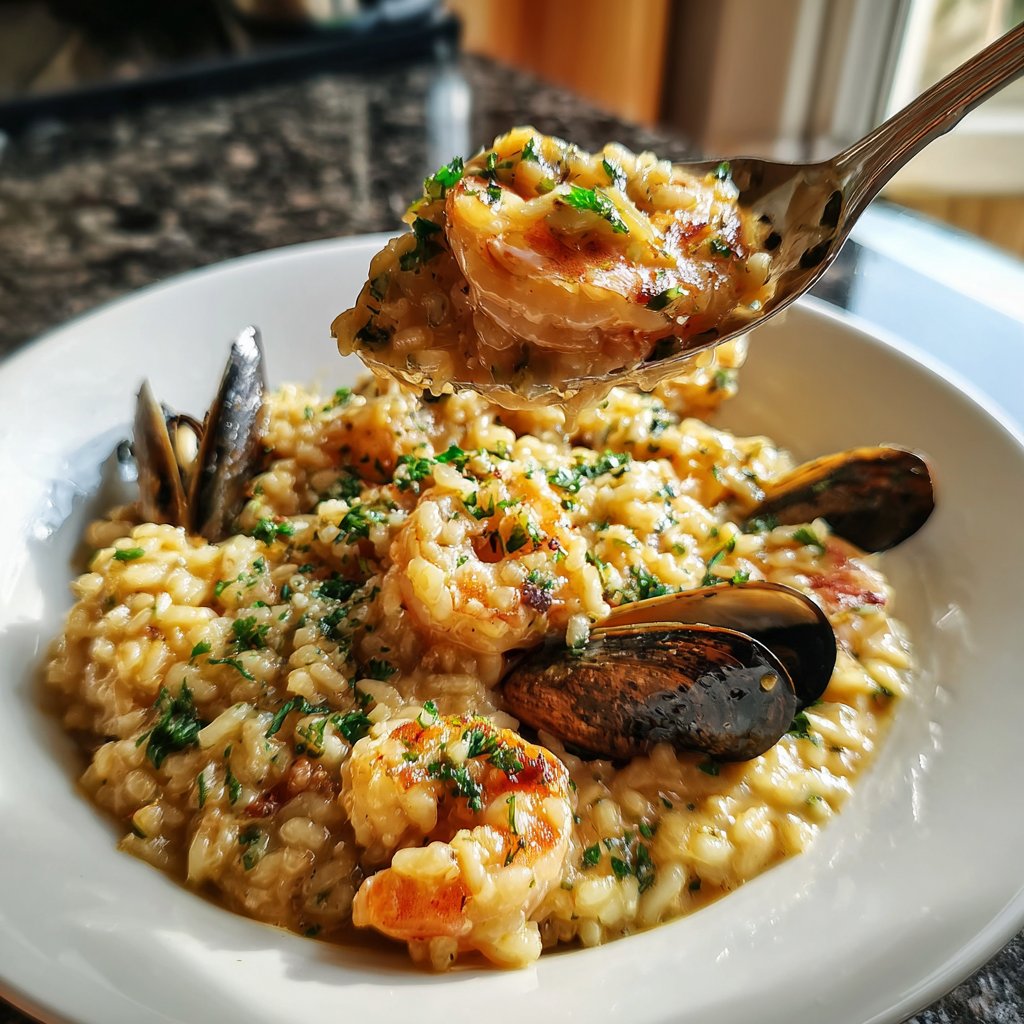
On my recent culinary adventure, I decided to experiment with a classic Seafood Risotto using white wine. I found that using a dry white wine not only enhanced the flavors of the seafood but also added depth to the creamy risotto. Every bite paired beautifully with a slight acidity that balanced the richness of the dish. This technique truly brought my risotto to life!
One tip I discovered while making this risotto was to stir the rice gently but consistently. It ensures the starches release properly, creating that characteristic creaminess. Also, I recommend using a mix of mussels, shrimp, and scallops for a delightful contrast in textures. Trust me, this dish will have everyone asking for seconds!
Why You'll Love This Recipe
- A rich and creamy base that perfectly complements fresh seafood
- The brightness of white wine elevates the dish's flavor profile
- Quick to prepare, making it a perfect weeknight dinner or special occasion treat
Understanding Arborio Rice
Arborio rice is the star of this seafood risotto, and its unique characteristics make it ideal for creating that creamy texture. Unlike regular rice, Arborio has a high starch content which is released during cooking, allowing the risotto to become luxuriously creamy without the need for excessive dairy. When you toast it in olive oil, you create a nutty, complex flavor base that rounds out the dish. Make sure not to skip this step, as it sets the tone for the entire experience.
When selecting Arborio rice, look for grains that are pearlescent and plump. They should feel slightly chewy, as overcooked rice can turn mushy and detract from the risotto's texture. If Arborio is unavailable, Carnaroli is a fantastic substitute. It has a similar starch profile and can add even more creaminess. However, avoid using long-grain rice varieties, as they will not yield the desired creamy consistency.
Seafood Selection Tips
Choosing the right seafood is crucial for a successful risotto. Fresh shrimp, scallops, and mussels not only enhance flavor but also add delightful textures. When purchasing shrimp, opt for those that are raw and shell-on; they retain more flavor than pre-cooked varieties. The scallops should be firm to the touch, indicating freshness. As for mussels, look for those that are tightly closed, which means they are alive and safe to eat. If you find any that are open, give them a gentle tap; if they don't close, it's best to discard them.
In case of dietary restrictions or availability issues, feel free to swap out seafood based on your preferences. For instance, you can use calamari or clams instead of mussels. If opting for bare-bones vegetarian, consider adding sautéed mushrooms and peas as replacements. Just remember to adjust the cooking time accordingly, as seafood typically cooks quicker than vegetables.
Serving and Pairing Suggestions
For an elegant presentation, serve the seafood risotto in shallow bowls, garnished with fresh parsley and a sprinkle of extra Parmesan. This not only adds color but also an inviting aroma. To elevate the meal further, consider a drizzle of high-quality extra virgin olive oil just before serving; it enhances the progressive flavors of the dish. You might even add a squeeze of fresh lemon juice for a burst of acidity that complements the seafood beautifully.
Pair the risotto with a crisp white wine, such as a Pinot Grigio or Sauvignon Blanc, which echoes the white wine used in the dish. The acidity in the wine balances the richness of the risotto, creating a harmonious dining experience. If you have leftovers, store them in an airtight container in the fridge for up to three days, but note that the rice will continue to absorb moisture. Reheat gently on the stove with a splash of broth to regain that creamy texture.
Ingredients
For the Risotto
- 1 cup Arborio rice
- 4 cups chicken or seafood broth
- 1 cup dry white wine
- 1 medium onion, finely chopped
- 3 cloves garlic, minced
- 2 tablespoons olive oil
- 1 tablespoon butter
- Salt and pepper to taste
- 1 cup shrimp, peeled and deveined
- 1 cup scallops, cleaned
- 1 cup mussels, cleaned
- 1/4 cup fresh parsley, chopped
- 1/2 cup grated Parmesan cheese
Instructions
Prepare the Broth
In a saucepan, heat the chicken or seafood broth until simmering. Keep it warm over low heat.
Sauté Aromatics
In a large skillet, heat the olive oil over medium heat. Add the chopped onion and garlic, sautéing until softened and fragrant.
Toast the Rice
Add the Arborio rice to the skillet and toast it, stirring frequently, until it turns slightly translucent.
Deglaze with Wine
Pour in the white wine, stirring until it's mostly absorbed by the rice.
Add the Broth Gradually
Begin adding the warm broth to the rice one ladle at a time, stirring continuously until the liquid is absorbed before adding more. Repeat until the rice is creamy and al dente, about 18 minutes.
Incorporate Seafood
In the last 5 minutes of cooking, gently fold in the shrimp, scallops, and mussels. Cook until the shrimp are pink and the mussels have opened.
Finish the Risotto
Remove from heat and stir in butter, Parmesan cheese, and season with salt and pepper to taste. Garnish with parsley.
Serve
Spoon the risotto into bowls and serve immediately, enjoying the creamy goodness!
Pro Tips
- For the best results, always use fresh seafood and stir the risotto consistently for a creamy texture.
Troubleshooting Common Issues
If your risotto ends up too watery, it’s likely because the broth was added too quickly. Ensure you're adding it one ladle at a time, constantly stirring until the liquid is absorbed before adding more. This technique not only ensures proper cooking but also promotes the release of starches for creaminess. Alternatively, if the risotto becomes too thick, adding a bit more warm broth can help bring it back to that desired consistency.
On the flip side, if your risotto seems overly salty, this could stem from the broth used. Opt for low-sodium chicken or seafood broth to better control the seasoning. Additionally, if the seafood is salty, consider rinsing it under cold water before incorporating it into the risotto. Always remember to taste as you go; seasoning can be adjusted right before serving for perfect results.
Make-Ahead Strategies
While risotto is best enjoyed freshly made, you can prepare most of the components ahead of time. Cook the rice until it's slightly underdone, then cool it quickly in a shallow dish to prevent sticking. Once cool, store it in an airtight container in the refrigerator. When it's time to serve, reheat with broth and fold in your seafood at the last minute for a quick finish.
Another option is to prepare the seafood in advance. Clean and marinate shrimp or scallops with lemon and herbs, and store them in the refrigerator. When ready to finish your dish, simply incorporate the prepped seafood into the risotto, adjusting cooking time as necessary since they will need less time to cook from a chilled state.
Variations to Try
For a twist on traditional seafood risotto, try adding saffron for a beautiful golden hue and an aromatic depth. Simply infuse the saffron threads in warm broth before incorporating it into the risotto, lending a luxurious flavor that's hard to resist. Alternatively, experiment with different seafood such as lobster or crab for a more decadent dish, adjusting the cooking times accordingly to avoid overcooking.
Vegetarian variations can include seasonal vegetables like asparagus or peas, providing a fresh flavor profile while still ensuring a creamy texture. You can also incorporate various cheeses, such as Pecorino or feta, for a unique taste. Try adding a few teaspoons of your favorite pesto before serving for an extra layer of flavor and a vibrant finish.
Questions About Recipes
→ Can I use frozen seafood?
Yes, but fresh seafood will always yield better flavor and texture.
→ What type of white wine is best?
A dry white wine like Sauvignon Blanc or Pinot Grigio works best for balance.
→ Can I make this dish vegetarian?
Absolutely! Replace seafood with mushrooms and use vegetable broth.
→ How do I store leftovers?
Store in an airtight container in the fridge for up to 2 days. Reheat gently on the stovetop.
Seafood Risotto with White Wine
Created by: Paige Sullivan
Recipe Type: International Recipe Hub
Skill Level: Intermediate
Final Quantity: 4 servings
What You'll Need
For the Risotto
- 1 cup Arborio rice
- 4 cups chicken or seafood broth
- 1 cup dry white wine
- 1 medium onion, finely chopped
- 3 cloves garlic, minced
- 2 tablespoons olive oil
- 1 tablespoon butter
- Salt and pepper to taste
- 1 cup shrimp, peeled and deveined
- 1 cup scallops, cleaned
- 1 cup mussels, cleaned
- 1/4 cup fresh parsley, chopped
- 1/2 cup grated Parmesan cheese
How-To Steps
In a saucepan, heat the chicken or seafood broth until simmering. Keep it warm over low heat.
In a large skillet, heat the olive oil over medium heat. Add the chopped onion and garlic, sautéing until softened and fragrant.
Add the Arborio rice to the skillet and toast it, stirring frequently, until it turns slightly translucent.
Pour in the white wine, stirring until it's mostly absorbed by the rice.
Begin adding the warm broth to the rice one ladle at a time, stirring continuously until the liquid is absorbed before adding more. Repeat until the rice is creamy and al dente, about 18 minutes.
In the last 5 minutes of cooking, gently fold in the shrimp, scallops, and mussels. Cook until the shrimp are pink and the mussels have opened.
Remove from heat and stir in butter, Parmesan cheese, and season with salt and pepper to taste. Garnish with parsley.
Spoon the risotto into bowls and serve immediately, enjoying the creamy goodness!
Extra Tips
- For the best results, always use fresh seafood and stir the risotto consistently for a creamy texture.
Nutritional Breakdown (Per Serving)
- Calories: 450 kcal
- Total Fat: 15g
- Saturated Fat: 7g
- Cholesterol: 195mg
- Sodium: 550mg
- Total Carbohydrates: 54g
- Dietary Fiber: 2g
- Sugars: 3g
- Protein: 20g